|
USS
Philadelphia Stars and Stripes Article |
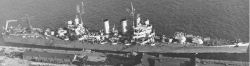
GALLOPING GHOST OF SICILIAN COAST" ALSO
BATTERED GERMANS AT SALERNO BY F. R. Kent (Stars and Stripes Naval Writer) In a burst of wishful thinking during the Sicilian campaign, the German High Command reported that the United States cruiser Philadelphia had been sunk by the Luftwaffe, but the "Galloping Ghost of the Sicilian Coast" denied the rumor with her main battery at Salerno. The Luftwaffe also found out to its cost that, like Mark Twain's death the demise of the Philly had been greatly exaggerated. The United States Navy Department this week disclosed for the first time the cruiser's record in the Mediterranean and on convoy action. The Philadelphia was part of the Armada under Vice Admiral H. Kent Hewitt, commander of United States forces in Northwest African waters, which invaded North Africa. She did fine work then, but the Sicilian invasion was her first real chance to go to town. During that campaign she underwent 24 direct air attacks and claimed a total of six enemy planes shot down. In one attack she got three out of eight of a German bomber group. It was in this campaign that naval gunfire support really came into its own, and the American cruiser division under Rear Admiral Lval A. Davidson carried the ball. The Philadelphia, Savannah, Brooklyn, Boise and others immobilized countless enemy gun emplacements, broke up troop concentrations and supported Allied landings. These cruisers disrupted enemy communications and transport along the shore. AT SICILY ALSO It was at Sicily, also that officers and crew, under almost daily air attack, claimed that their ship had been bombed more frequently than any American warship in the European war. Somehow she always came through. It was with a palpable sigh of relief that the Germans announced her sinking and it was this announcement which caused the British to address a dispatch to "The Fearless Ghost of the Sicilian Coast". Officers and men swore that she might well have been a ghost, too, had it not been for the uncanny skill with which Capt. Paul Hendren, then commanding, evaded attacking planes. After the Sicilian campaign, Capt. Hendren received the Legion of Merit. Salerno was louder and better. The Philadelphia was there in the thick of it, and her big guns hammered whatever target the Army asked to be destroyed. On two occasions she dealt with enemy tank concentrations. Her interdiction fire made roads back from the shore unusable. There was one period of nearly 48 hours when men were fed at their battle stations and slept by the guns, so frequently did requests for firing missions come in. Once, when conditions were favorable, the Philadelphia also used her secondary batteries. Observers on other ships said the Philly looked as though she were on fire as her guns flamed at the enemy. Sunk off Sicily, eh? |